
This piece was originally Published in Almanassa.
_ “I’ve Wasted My Life in the Void!”
(Buzz Lightyear, a Toy, Toy Story)
In the first encounter between Woody the cowboy and Buzz Lightyear in Toy Story, one of the film’s core conflicts emerges—one that is tied specifically to Buzz’s character.
The world of the film, as presented from the very first moment, is one in which toys are not merely toys in the conventional sense. Instead, they come to life, realizing one of childhood’s greatest fantasies, whenever they are sure no human is watching. All the toys understand this reality, abide by it, and stop moving the moment a human enters the room. They all know they are toys, representations of something real.
The dog is not a real dog; it is a plastic figure in the shape of a dog. The Wild West sheriff, Woody, is not an actual law enforcer but a plastic action figure designed to look like one. All the toys recognize this about themselves, except for Buzz Lightyear.
Buzz Lightyear’s dilemma, which we become entangled in from the very beginning, is his absolute conviction that he is a real astronaut, not just an ordinary toy. And not just any astronaut, but an important and distinguished one, a member of the Galactic Alliance’s Space Rangers, tasked with protecting the galaxy from the looming invasion of Emperor Zurg, the sworn enemy of the Galactic Federation. A big problem, indeed.
Why is it that Buzz Lightyear, out of all the toys, gets completely caught up in these delusions and believes them so wholeheartedly? It’s an important question, but the film doesn’t offer a clear answer. However, manufacturing defects are always a possibility. In a production line churning out thousands of toys, there are bound to be one or two that believe they are an astronaut, or even an employee at the health department. Malfunctions happen, after all, and surely there are other toys in other places, ones we haven’t had the luck to see, that believe in even stranger things.
Of course, by now, we’ve long moved past the question of whether toys come to life when we’re not looking. That is no longer up for debate, it is a fact. There’s no need to question the validity of this belief anymore. We’ve agreed upon it, and our agreement has painted reality in its colors. If anyone has a problem with that, they’ll have to invent their own set of delusions.
As for the film’s central conflict, it lies in Woody’s jealousy of Buzz Lightyear. Until recently, Woody had been Andy’s favorite toy. But that all changed with Buzz’s arrival. The child was dazzled by Buzz, by his plastic wings that unfolded at the push of a button, by the devastating laser he fired from his arm. Woody, the cloth doll, was left on the shelf. Goodbye, Woody. Come here, Space Ranger, let’s embark on an adventure across the galaxy and protect it from Emperor Zurg’s attacks. Cowboy stories have no place here.
We witness the tension between the two toys very early in the film. Woody is jealous, angry, and feels threatened. He grabs the wings attached to Buzz’s spacesuit and shakes them, telling the other toys, who are gathered around in awe, “It’s just plastic.”
Buzz, of course, objects, as any astronaut would when being mocked, and insists that his wings are made from a special alloy of terrium carbonic alloy. (By the way, this is not a real material. There’s no such thing as terrium carbonic alloy. But perhaps it exists in the world of Buzz’s delusions. And who’s to say that makes it any less real?)
In one of the film’s scenes, after things have taken a turn for the worse—Woody and Buzz have become prisoners in a house where a deranged child is trying to destroy them—Buzz Lightyear spots an open window. He looks at it with immense joy. Finally! A window!
Buzz’s emotions are clear: sheer happiness. The problem is solved. He will fly to the window, escape this dump, and be free. He is an astronaut; he can fly. And here is a window he can fly through to make his escape.
We, of course, know exactly what’s going to happen. But he doesn’t—not yet.
He stands at the top of the staircase, straightens his back, spreads his arms wide, and jumps, fully expecting to take off—just as any astronaut who can fly would. Instead, he crashes to the ground, just like any plastic toy that cannot fly.
The shot cuts to an overhead view. We see Buzz lying on the floor, his arm broken.
At that moment, Buzz realizes that his long-held belief—that he is an astronaut—was completely false. In reality, it was nothing more than a set of preprogrammed ideas planted in his mind.
In the following scenes, Buzz completely loses his mind, shaken by the trauma of discovering the truth in the most brutal way possible. Then, in the beautiful Arabic dub of the film, he delivers his now-iconic line with dramatic intensity:
“I’ve wasted my life in the void!”
This line carries a clever play on words in Arabic. The word “الفضا” (al-fada) can mean “space,” which makes sense given that Buzz spent so long believing he was a space ranger. But it also means “nothingness.” And so, in this moment of tragic irony, Buzz isn’t just lamenting a wasted life in outer space—he is mourning a life wasted on nothing. The line perfectly captures the catastrophe he is experiencing.
What fascinates me most is that this toy, which cannot fly, instinctively expresses the waste of its life using a word drawn from the very world it has just discovered to be a lie. Al-fada. Because realizing that one’s world is an illusion does not mean one is free from it. The language of that world lingers. Language is the last thing to be liberated.
Buzz Lightyear falls twice, then.
The first time, when he literally tries to fly—he jumps, crashes, and breaks his left plastic arm.
The second time, when he tries to express the realization that he has wasted his life on a grand deception, a lie he convinced himself of. Yet, even in doing so, he uses the very same terminology of the false world he had been trapped in.
This sentence, in particular, carries all of that weight.
A sentence that, had it been spoken by a real astronaut, would have been a solemn reflection—an honorable acknowledgment of a life spent on something great.
An Interlude with Marco Polo
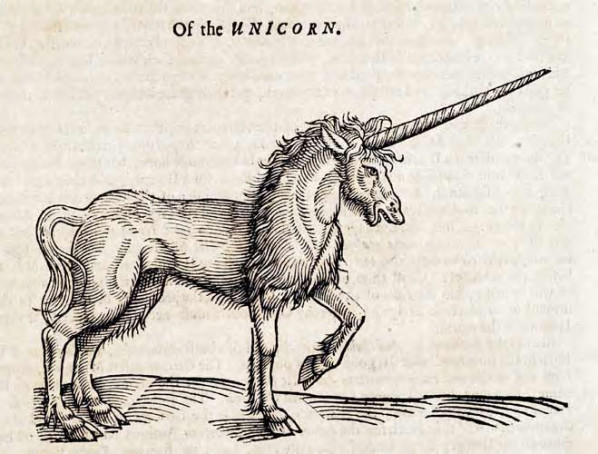
In the Middle Ages, the unicorn was an important and popular creature in the realm of imagination. A beautiful animal—essentially a horse with a horn—its only problem was that it didn’t actually exist. For a long time, people in Europe firmly believed in such a creature. But, of course, no one had ever seen one. Today, we know for certain that there is no such thing as a horned horse.
During Marco Polo’s return journey from China, specifically when he passed through the islands of Java in Indonesia, he encountered an animal that he believed to be the long-sought unicorn that Europe had been searching for. However, in his writings, he could not hide his disappointment when describing the creature: it looked like a bull, had thick, wrinkled skin similar to that of an elephant, was black rather than white, and its horn was not beautifully colored but rather a rough, grayish, dirty thing.
It was an animal with no aesthetic qualities worth mentioning—an outright ugly beast, really. What a pity, compared to the elegant creature he had envisioned from the tales that filled Europe.
Today, we know that Marco Polo was describing a rhinoceros—an animal utterly devoid of any of the mythical beauty attributed to the unicorn.
He saw a horned creature, and he had only one word for it: unicorn.
Marco Polo was ready to see a unicorn, so he saw one. He was prepared for it, but he found it in another animal. He was primed to encounter a creature with certain traits, so he projected those traits onto the first animal that even remotely resembled, in the most distant way, what he had heard about in his childhood and youth.
He did not realize that he was looking at an entirely different species, one that had no relation to the creature of his imagination. But since no one can escape themselves, he could not conjure up a new description. Instead, he had to borrow one from what he already knew, from what was familiar to him—from the world he came from.
Back to Buzz the Rescuer
And when Buzz Lightyear decided to express how he felt about his unwavering conviction that he was an astronaut, he found himself using only the language of the world he knew—even if that world was entirely fictitious.
In those moments, the familiar holds more power than the truth, even if the familiar is entirely made of delusions.
But perhaps, in that very moment when Buzz declared that he had wasted his life in space, he was closer than ever to being a real astronaut.
 Ahmad Gamal Saad-Eddin
Leave a comment