-

History through a grain of pollen
This piece was originally published in Nature Middle East In a small village called El-Hamoul, surrounded by the green fields of Eygpt’s Nile Delta, a young girl gathered herbs from along the irrigation canal. She arranged similar flowers in neat rows on the damp soil. “The plants that grew all year…
-

Regulation, Not Combat: Another Face of Immunity
This piece was originally published in Nature Middle East. The easy, somewhat simplistic choice in describing the immune system, with all the complexity of its biological processes, is that it is: an “army” or a “line of defense.” This metaphor has gained complete dominance over time in biological science literature. It…
-

The End of the Asylum
On the strange accident that rewired the story of madness. This piece was originally Published in Almanassa. Joel Elkes was born on November 12, 1913, and died on October 30, 2015. He changed the face of psychiatry forever. It’s impossible to speak of modern psychiatry, despite all the skepticism and suspicion…
-

A Theory
In my childhood and distant teenage years, I used to get very upset when my father and mother objected to my desire to buy a new book, arguing that I already had unread books at home. I felt there was something wrong with that logic, but I couldn’t quite pinpoint…
-

On a bewitching moment of hesitation
In a letter dated 1754, the English politician Horace Walpole wrote to a friend recounting the unexpected discovery of a lost painting he never thought he’d find. For the first time, at least as recorded, Walpole used the term serendipity to describe the event. The word, with a touch of liberty, can…
-
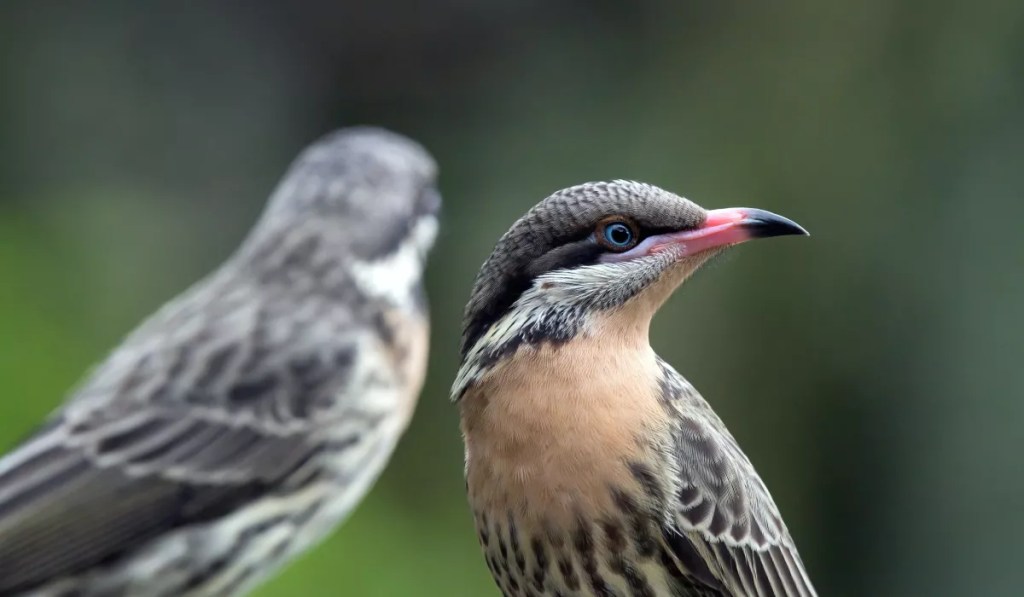
Why Do Birds Forget Their Songs?
This piece was originally Published in Almanassa. Songbirds usually fail in their first attempts to learn how to sing. But they improve with each subsequent try. They learn their songs in much the same way a child learns to speak: by watching, trying, failing, and repeating until they succeed. A child…
-
There is poetry in the southbound train to Upper Egypt
In recent days, I find poetry in places where poetry isn’t supposed to be. I suspect it’s because I’ve been steadily moving away from traditional notions of what is “poetic” and what isn’t. Some conventional poetry still stirs me, for its lyrical elegance or rhythmic sweetness, and I revisit it.…
-
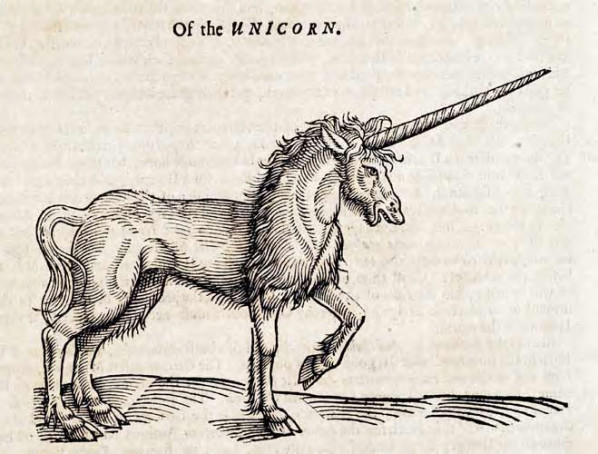
On Language, an Astronaut, and a Unicorn
This piece was originally Published in Almanassa. _ “I’ve Wasted My Life in the Void!” (Buzz Lightyear, a Toy, Toy Story) In the first encounter between Woody the cowboy and Buzz Lightyear in Toy Story, one of the film’s core conflicts emerges—one that is tied specifically to Buzz’s character. The world of…
-

Seeing Order Within chaos
This article was originally published on October 5, 2021, as part of Nature Arabic Edition’s coverage of the Nobel Prizes for that year. The 2021 Nobel Prize in Physics honors three scientists from Germany, Italy, and the United States, who have brought clarity to the chaos of complex systems, revealing…
-
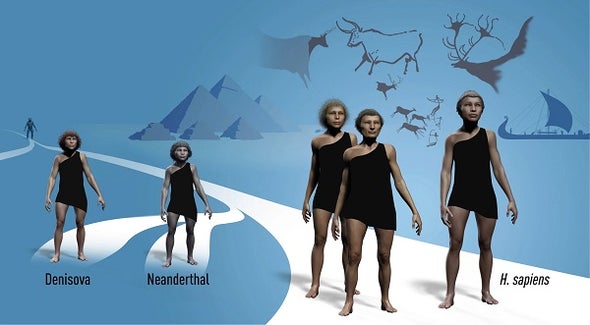
We are Carrying the Ancients in Our Genes
What Makes Us—Humans—So Different? The eternal question of humanity, one we begin with and return to. With each new attempt to explore an answer, we complete part of an ever-changing and evolving picture. While new knowledge in this area is endless, continuously adding to our understanding, it also serves…
-
The Weird Case of H.M
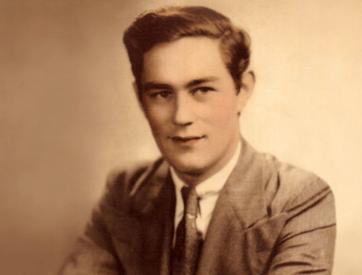
This Article was originally published in The Arabic Edition of Scientific American. In 1933, a bicycle rider collided with a six-year-old boy playing on the streets of Manchester, Connecticut. The collision was minor, but it caused the child to fall at a dangerous angle, leading to a violent impact of…
-

The Pain of Being a Woman
This piece was originally written as an episode for (El-Daheeh). One day, Joe Fassler woke up in the morning like any typical day, thinking about what he will do, where he will go, and, for sure, what he will have for breakfast! But suddenly he heard his wife screaming in pain…
-

The Unpaved road of Psychiatry
The article was originally published in The Arabic Edition of Scientific American. The first time Sarah visited a psychiatrist, he told her, “I don’t deal with ‘problems’, I only treat illnesses. I wouldn’t have a solution for your problems if you got one”. This sharp tone troubled her immensely and…
-
Out of the Equation: Covid-19 Pandemic and its Impact on Mental Health
Over time, Amr Abdullah, an Egyptian cardiologist, grows to notice his anxiety pattern. While being occupied in his daily routine at the hospital, he senses a feeling of mild stress, reflected in the strict implementation of prevention instructions and following up on cases with keen attention. This feeling reaches a…
-

“Chernobyl”: Three Attempts to Narrate a Nuclear Disaster
It is hard to encounter a show based on true events, without wondering: What is true in what we watch or read? What happened in reality? And what was added to the events for the drama’s sake? Curiosity here is very common, particularly since the spaces where the creators seem,…
-

The Man and his Garden
1 One day, just like any other day, in the British countryside, the sun rose above Darwin’s house in Kent; a beautiful, quiet home surrounded by trees, where birds sang, leaves swayed with the wind, and dogs sniffed around for something to eat. Time: 1866 or 1867 Charles Darwin woke…
Ahmad Gamal Saad-Eddin
Writings about science, history, and the peculiar organism known as the human.

 Ahmad Gamal Saad-Eddin