
This Article was originally published in The Arabic Edition of Scientific American.
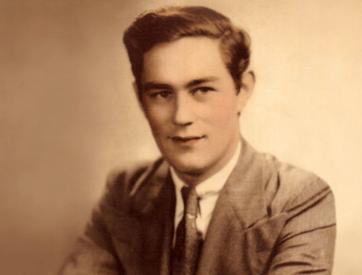
In 1933, a bicycle rider collided with a six-year-old boy playing on the streets of Manchester, Connecticut. The collision was minor, but it caused the child to fall at a dangerous angle, leading to a violent impact of his head against the pavement, resulting in a skull fracture. His parents quickly took him to the hospital, where he received the necessary medical care. Over time, everyone forgot about the incident.
However, a more serious health issue began to emerge. The boy, Henry, started developing neurological symptoms. Whether he was playing with his friends, walking through his house, or doing schoolwork, he would suddenly experience seizures or fainting spells.
As the issue persisted, it became clear that Henry’s life was facing a serious crisis. By the time he turned fifteen, his condition worsened, with seizures occurring more frequently. His life came to a complete halt, as did his family’s. The situation escalated to the point that he had to drop out of school. These consequences led to depression and a lack of will to live, especially as he grew older and treatment options dwindled.
During this time of despair, the name of American doctor William Scoville emerged. He was one of the most renowned neurosurgeons of his time, known for performing aggressive surgeries on patients. Neuroscience was still in its early stages, and little was known about how the brain functioned.
Scoville examined the young patient and decided to perform a surgery to remove the hippocampus from his brain. At that time, the functions of this brain region—like many others—were not well understood. Based on the available knowledge, Scoville believed that the removal of the hippocampus could reduce the severity of Henry Molaison’s seizures. In early September 1953, Henry underwent the operation, and his hippocampus was entirely removed.
Side Effects
At first, the surgery appeared to be a resounding success. Henry’s seizures were significantly reduced, and the intervals between them increased. He showed no apparent personality changes—his speech, thinking, and motor skills remained intact. Even his intelligence seemed unaffected. To verify this, doctors compared IQ test results taken before and after the surgery, and surprisingly, Henry performed slightly better on the post-surgery test. Some members of the medical team even joked that the hippocampus might have been unnecessary and that they had only just discovered this. However, soon after, new problems emerged.
Henry Molaison could no longer form new memories. He had completely lost the ability to remember anything that happened after the surgery, though he retained memories from his past. When asked about his name, his parents, his home, and past activities, he answered without difficulty. But if someone left the room and returned minutes later, Henry would not recognize them at all and would have to be reintroduced to them.
This was a bewildering moment. The surgery had fixed something, but it had also damaged a fundamental aspect of human memory. Although this was a personal tragedy for Henry, it was a groundbreaking discovery for neuroscience.
A Fortunate Misfortune
Since the inception of neuroscience, scientists have known that human brains are both similar to and different from those of animals. However, the brain contained enigmatic regions that were difficult to study or manipulate in a lab. Questions like: What is perception? What is consciousness? How do we define the self? Why do humans recognize themselves while many animals do not? These questions sparked ongoing debates.
Cases like Henry Molaison’s were, paradoxically, valuable for researchers despite their devastating impact on the individuals affected. Unlike many other brain injury cases, Henry’s condition was unique in that his brain was mostly intact, except for the precise area removed during surgery. This provided a rare opportunity to study the effects of a localized brain lesion.
Henry Molaison—later referred to as patient “H.M.” in scientific literature—became a pivotal case in our understanding of human memory. His condition revealed that memory is not a single entity but rather composed of different types, each linked to specific brain regions. This meant that damage to one area of the brain could impair certain functions while leaving others intact.
At this point, a researcher named Brenda Milner emerged. She is now known as the founder of clinical neuropsychology. At the time, she was a doctoral student who dedicated herself to studying Henry’s case in an attempt to understand exactly what had happened.
One of her most influential experiments involved a simple yet revealing task. She drew a large star on a sheet of paper and then a smaller star inside it. Henry was asked to trace a line between the two stars while looking at his hand only through a mirror. This was a challenging task for anyone. Initially, Henry struggled, making errors like any first-time participant would. However, he had an additional problem—each time he attempted the task, he had no recollection of having done it before. Milner had to explain the test anew each time.
But the surprising result was that Henry’s performance improved with practice, even though he had no memory of the task itself. After several days of training, he was able to complete the task without errors. This led Milner to one of the most important discoveries in neuroscience: memory is not a singular function. There are multiple types of memory.
Today, we know that memory consists of short-term and long-term components, each associated with distinct brain regions. Through Henry’s case, scientists identified the hippocampus as a crucial structure for consolidating short-term memories into long-term ones.
The hippocampus serves as a kind of bridge, allowing fleeting experiences to be stored as lasting memories. This process is what enables us to develop a continuous sense of self and accumulate knowledge. Unfortunately, Henry Molaison had lost this ability entirely.
After the consolidation phase, long-term memory splits into two major types: declarative (explicit) memory and procedural (implicit) memory. Declarative memory includes facts and experiences—such as memories of school, first love, or general knowledge—while procedural memory involves skills and actions, such as riding a bike or playing an instrument.
Milner was able to explain why Henry could learn a motor skill like tracing the star without remembering the experience. The brain has separate memory systems, and procedural memories are controlled by different areas, such as the cerebellum and basal ganglia, which were not damaged in Henry’s surgery. This explained why he could develop motor skills even though he lacked the ability to form new conscious memories.
A Priceless Scientific Legacy
Henry Molaison passed away on December 2, 2008, at the age of 82 in a nursing home in Windsor Locks, Connecticut. After his death, neuroscientist Suzanne Corkin—who had studied under Brenda Milner—released a statement revealing that Henry was the famous “H.M.” whose case had revolutionized neuroscience.
Henry’s case raised profound questions about memory, ethics, and the nature of human consciousness. Unlike most brain injury patients, Henry’s condition resulted from a precise and localized surgical intervention, making him an invaluable subject for scientific research. His case came at a time when knowledge of the brain was limited, and ethical considerations surrounding experimental surgery were still evolving.
The story of Henry Molaison offers deep insights not only into neuroscience but also into the history of medicine. While we have made great strides in understanding memory, cognition, and ethics, many questions remain unanswered—especially concerning perception and consciousness, which define what it means to be human. Revisiting such landmark cases reminds us that scientific progress is fragile and depends on our ability to recognize and preserve the knowledge we gain.
 Ahmad Gamal Saad-Eddin
Leave a comment